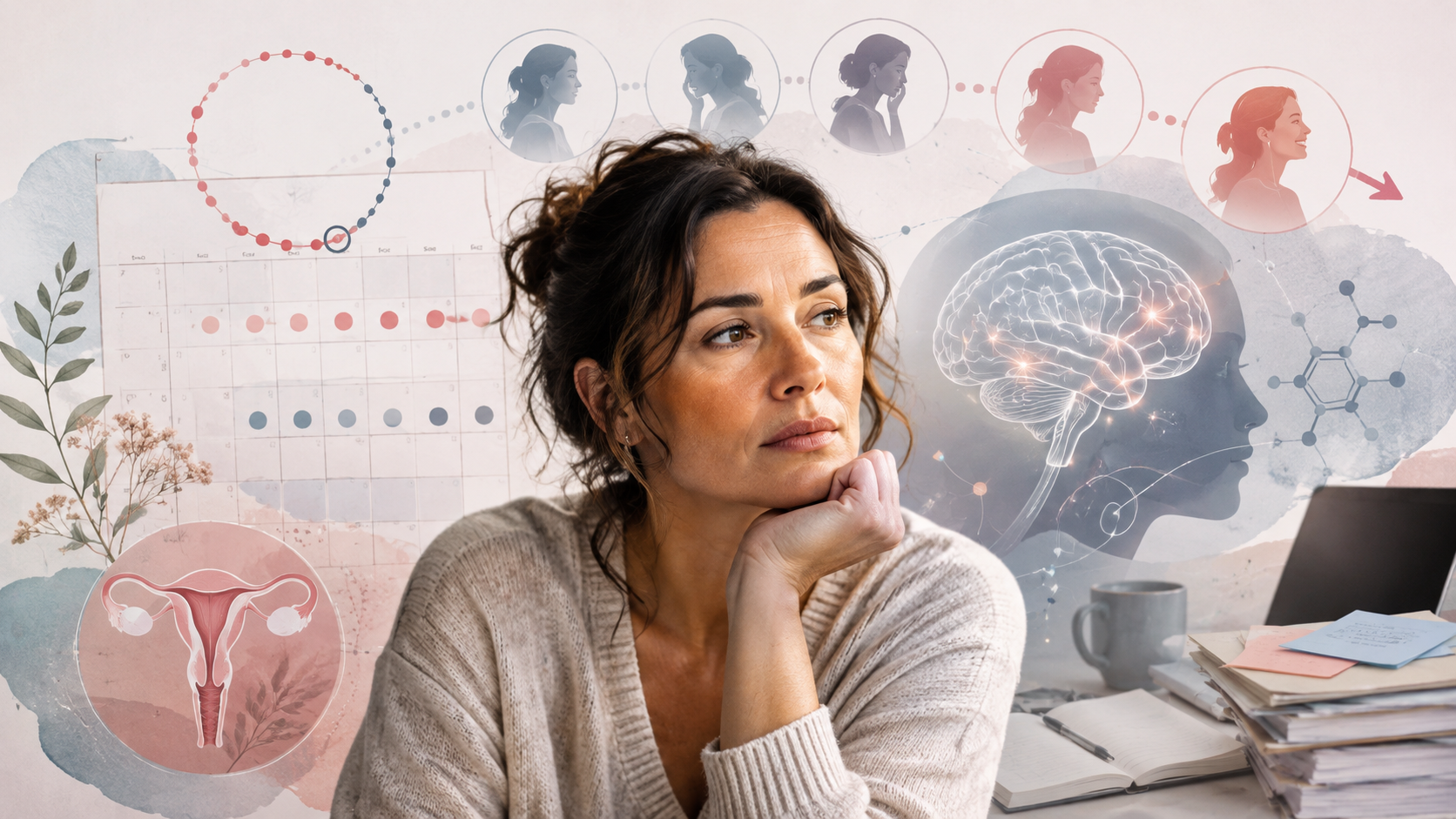
Perimenopause Anxiety in Denver: Why It Happens and What Actually Helps

Why Am I Suddenly So Anxious?
Many women notice anxiety for the first time in their late 30s or 40s.
Or, anxiety they’ve always managed suddenly feels:
- more intense
- more physical
- harder to control
You might feel:
- constantly on edge
- easily overwhelmed
- irritable or reactive
- unable to relax—even when things are “fine”
And often, there’s no clear external reason.
If this sounds familiar, it may be related to perimenopause.
What Is Perimenopause?
Perimenopause is the transition leading up to menopause, when hormone levels—particularly estrogen and progesterone—begin to fluctuate.
This phase can last:
- several years
- often starts in your late 30s to mid-40s
Unlike menopause, which is defined by consistently low hormones, perimenopause is:
a period of unpredictability
And that unpredictability affects the brain.
Why Perimenopause Causes Anxiety
Hormones don’t just affect your body—they directly affect your brain.
Estrogen supports:
- serotonin (mood stability)
- dopamine (motivation, focus)
- GABA (calm, regulation)
When estrogen fluctuates:
- mood becomes less stable
- stress tolerance decreases
- anxiety becomes more physical and reactive
Progesterone and Anxiety
Progesterone is often thought of as calming—but for some women, it has the opposite effect.
This is due to its metabolite, allopregnanolone (ALLO), which interacts with GABA receptors.
In some individuals:
- this system becomes sensitive or dysregulated
- leading to:
- irritability
- restlessness
- anxiety
This is why some women feel:
worse, not better, when progesterone changes
What Perimenopause Anxiety Feels Like
Perimenopausal anxiety often has a distinct pattern.
You may notice:
- sudden onset of anxiety without prior history
- worsening anxiety before your period
- sleep disruption that makes everything feel worse
- increased sensitivity to stress
- physical symptoms (racing heart, tension, restlessness)
It can feel less like “worry” and more like:
your nervous system is constantly activated
The Denver Factor: Why It Can Feel Worse
Living in Denver can add additional stress to the system:
- Altitude (5,280 ft) may contribute to lighter, more fragmented sleep
- Sleep disruption directly worsens anxiety and emotional regulation
- Weather variability can affect routine and circadian rhythm
- Many women experience a disconnect between how they feel and the high-functioning culture around them
These factors don’t cause anxiety—but they can:
amplify symptoms when your system is already more sensitive
When to Consider Treatment
If anxiety is:
- persistent
- worsening
- interfering with your daily life
…it’s worth being evaluated.
Especially if:
- this is new for you
- symptoms fluctuate with your cycle
- you feel like your usual coping strategies aren’t working
What Perimenopause Anxiety Treatment Looks Like
Treatment depends on what’s driving your symptoms.
Most women benefit from a combination approach.
1. Hormone Therapy (When Appropriate)
For some women, stabilizing estrogen levels can significantly improve mood and anxiety.
This may include:
- transdermal estradiol (patch, gel, or spray)
- progesterone when needed for uterine protection
The goal:
reduce hormonal fluctuations that trigger symptoms
2. Psychiatric Medication
When symptoms are more persistent or severe, medication can be helpful.
Options may include:
- SSRIs or SNRIs
- medications targeting physical anxiety symptoms
Medication is not a last resort—it’s:
one of several tools used to stabilize the system
3. Sleep and Nervous System Support
Sleep disruption is one of the biggest drivers of worsening anxiety.
We often focus on:
- improving sleep consistency
- reducing nighttime awakenings
- supporting nervous system regulation
These changes:
make all other treatments more effective
Hormones vs Anxiety Disorder: How to Tell
This is one of the most common questions.
Hormonal anxiety:
- fluctuates
- often worsens before your period
- feels more physical and reactive
Primary anxiety disorder:
- more consistent over time
- not tied to hormonal patterns
Many women experience:
a combination of both
Which is why treatment often needs to address:
- brain chemistry
- hormonal patterns
What Makes This Different from “Just Stress”
A lot of women are told:
- “you’re just stressed”
- “this is normal”
But perimenopause-related anxiety is:
biologically driven and highly treatable
It’s not about trying harder—it’s about:
treating the underlying drivers
When to Seek Help
Consider a psychiatric evaluation if:
- you don’t feel like yourself
- anxiety is interfering with daily life
- symptoms are new or worsening
- you suspect hormones may be involved
If something feels off, it’s worth looking into.
Final Thought
Perimenopause can feel like your body—and your mind—are no longer predictable.
But this isn’t random.
It’s a physiological transition that affects your brain, and it can be treated.
With the right approach, most women experience:
significant improvement—and feel like themselves again
FAQ: Perimenopause Anxiety
Can perimenopause cause anxiety even if I’ve never had it before?
Yes. Many women experience anxiety for the first time during perimenopause due to hormonal fluctuations.
Does hormone therapy help anxiety?
For some women, yes—especially when symptoms are hormonally driven. It works best as part of a broader treatment plan.
Why does my anxiety get worse before my period?
This is often related to changes in estrogen and progesterone during the luteal phase, which affect mood-regulating systems.
Should I take hormones or an antidepressant?
It depends on your symptom pattern and severity. Many women benefit from one or both.
Why does progesterone sometimes make me feel worse?
Some women are sensitive to allopregnanolone (ALLO), a metabolite of progesterone that affects the brain’s calming system.
How long does treatment take to work?
This depends on the approach. Hormone therapy and medications may take a few weeks to stabilize symptoms.
Learn More:
Mood Changes During Perimenopause are Real
The Hormonal Rollercoaster of Perimenopause
Why do my hormone labs look normal, but I don't feel normal?
About Conscious Psychiatry
Conscious Psychiatry provides psychiatric medication management and hormone-informed mental health care for women in Denver and throughout Colorado. We specialize in anxiety, depression, PMDD, OCD, perimenopause and perinatal related mood symptoms using an evidence-based, individualized approach.
If you’re unsure whether your symptoms are hormonal, psychiatric, or both, we can help you determine the right treatment plan.
In-Person in Denver | Virtually Throughout Colorado and Oregon
Address: 950 S Cherry St Suite 1675, Denver, CO 80246