PMDD: Why You Feel Like a Different Person Before Your Period (and What Actually Helps)

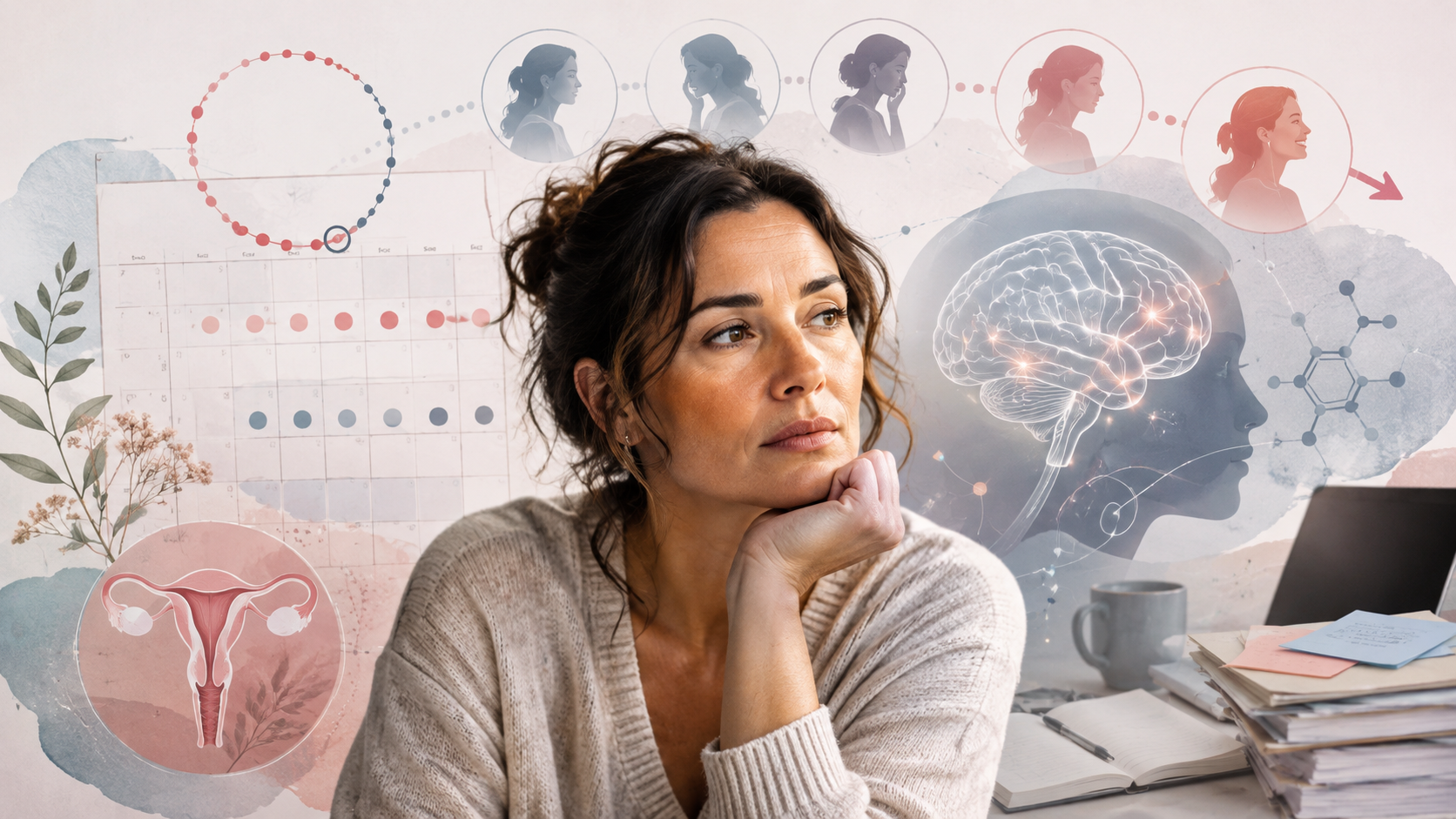
It Starts the Same Way Every Month
It begins about two weeks before your period.
The anxiety that feels almost physical—like you want to crawl out of your skin.
The irritability or rage that feels out of proportion, even to you.
The low mood that shifts how you see yourself, your relationships, your life.
And then, almost overnight, it lifts.
Your period starts—and you feel like yourself again.
If this pattern feels familiar, you’re not imagining it.
And you’re not overreacting.
This is often what PMDD (Premenstrual Dysphoric Disorder) looks like.
What PMDD Actually Is (and What It’s Not)
PMDD is not just “bad PMS.”
It’s a recognized psychiatric condition that affects about 3–8% of menstruating individuals and can significantly disrupt daily functioning.
The difference is not just severity—it’s impact.
- PMS → uncomfortable but manageable
- PMDD → emotionally and functionally disruptive
PMDD can affect:
- Work and productivity
- Relationships
- Sense of self
- Overall quality of life
When to Consider PMDD
Many women spend years questioning whether what they’re experiencing is “normal.”
PMDD becomes more likely when:
- Symptoms follow a predictable monthly pattern
- They begin in the luteal phase (after ovulation)
- They resolve shortly after your period starts
- They significantly impact your ability to function
You might feel:
- Like a different person part of the month
- Unable to regulate your emotions
- Overwhelmed by reactions that don’t match your baseline
This pattern is not a personality issue—it’s a biological pattern with a known mechanism.
Why PMDD Happens
PMDD is not caused by having too much or too little of a hormone.
Instead, it’s driven by:
increased sensitivity to normal hormonal changes
After ovulation, progesterone rises—and is metabolized into a neuroactive compound called allopregnanolone (ALLO).
ALLO interacts with GABA-A receptors, which regulate calm, inhibition, and emotional stability.
In PMDD:
- This system doesn’t respond typically
- Instead of calming, these changes can feel destabilizing
That’s why symptoms can feel:
- Sudden
- Intense
- Out of proportion
- Hard to control
Common PMDD Symptoms
Emotional
- Severe mood swings
- Irritability or anger
- Anxiety or feeling “on edge”
- Depression or hopelessness
- Increased sensitivity to rejection
Physical
- Fatigue
- Bloating
- Breast tenderness
- Headaches
Cognitive
- Difficulty concentrating
- Brain fog
- Feeling mentally overwhelmed
The key distinction:
These symptoms interfere with your life, not just your comfort.
PMDD in Denver: Why Symptoms May Feel Worse
While PMDD is driven by hormonal sensitivity, environment can influence how symptoms feel.
In Denver:
- Altitude (5,280 ft) can contribute to lighter, more fragmented sleep
- Sleep disruption directly worsens mood and emotional regulation
- Weather variability can affect circadian rhythm and daily stability
- Many women experience a disconnect between how they feel and the high-functioning culture around them, which can increase self-criticism during symptomatic periods
These factors don’t cause PMDD—but they can:
make symptoms feel more intense or harder to manage
The Most Important Thing to Know: PMDD Is Treatable
This is where many people get stuck.
They’ve been told:
- “It’s just hormones”
- “This is normal”
- “Try to manage stress”
But PMDD has evidence-based treatments that work.
What PMDD Treatment Actually Looks Like
Treatment is individualized—but typically includes a combination of the following:
1. Medication (First-Line Treatment)
SSRIs are the most effective first-line treatment for PMDD.
They can be used:
- Daily
- Only during the luteal phase
- Intermittently as symptoms begin
Many women experience:
- Significant improvement within 1–3 cycles
- Reduction in emotional intensity
- Improved stability and functioning
2. Hormonal Approaches (When Appropriate)
For some women, stabilizing or suppressing hormonal fluctuations can help.
Options may include:
- Specific oral contraceptives (e.g., drospirenone-containing)
- Continuous dosing strategies
- Other hormone-based approaches depending on severity
3. Nervous System and Behavioral Support
Medication works best when the system is supported.
This may include:
- Sleep optimization
- Stress and nervous system regulation
- Targeted therapy approaches (e.g., ACT)
These are not replacements for treatment—they help:
make symptoms more manageable and treatment more effective
Why PMDD Is So Often Missed
PMDD is frequently dismissed or misunderstood.
Many women are told:
- “Everyone gets PMS”
- “You’re being too sensitive”
- “It’s just stress”
This leads to:
- Delayed diagnosis
- Years of unnecessary suffering
- Mislabeling as anxiety or depression alone
What Makes an Accurate Diagnosis
A proper PMDD evaluation includes:
- Symptom timing and pattern
- Functional impact
- Differentiation from other conditions
- Often, symptom tracking over 1–2 cycles
Tracking is one of the most useful first steps.
When to Seek Help
Consider evaluation if:
- Symptoms significantly affect your life
- You feel like a different person cyclically
- Relationships or work are impacted
- You’ve tried coping strategies without improvement
If your symptoms follow a clear monthly pattern but haven’t been taken seriously:
This is exactly the type of condition that can be evaluated and treated effectively.
Final Thought
PMDD can make you question yourself—your emotions, your reactions, even your identity.
But this isn’t who you are.
It’s a treatable condition with a real biological basis.
And with the right approach, you don’t have to keep losing half your life to it.
FAQ: PMDD Treatment
What is PMDD and how is it different from PMS?
PMDD is a severe form of PMS that causes significant emotional and functional impairment. Unlike PMS, it interferes with daily life and relationships.
Why do I feel like a different person before my period?
PMDD is caused by the brain’s sensitivity to hormonal changes—particularly progesterone and its metabolite allopregnanolone.
What is the most effective treatment for PMDD?
SSRIs are the first-line treatment and help about 60–70% of women. They can be taken daily or only during the symptomatic phase.
Do I need to take medication every day?
Not always. Many women use luteal-phase or symptom-onset dosing.
Can hormones help PMDD?
In some cases, yes—especially when stabilizing hormonal fluctuations reduces symptom triggers.
Why don’t my labs show anything wrong?
PMDD is not caused by abnormal hormone levels—it’s caused by how the brain responds to normal hormonal changes.
How do I know if I have PMDD?
A clear cyclical pattern—worsening before your period and improving after—is a key indicator.
What does treatment actually look like?
Usually a combination of:
- Medication
- Symptom tracking
- Lifestyle and behavioral support
- Hormonal strategies when appropriate
Learn More:
The Efficacy of Continuous Versus Luteal SSRI Dosing in PMDD
Is it more than PMS? Learn about PMDD
International Association for Premenstrual Disorders
About Conscious Psychiatry
Conscious Psychiatry provides psychiatric medication management and hormone-informed mental health care for women in Denver and throughout Colorado. We specialize in anxiety, depression, PMDD, OCD, perimenopause and perinatal related mood symptoms using an evidence-based, individualized approach.
If you’re unsure whether your symptoms are hormonal, psychiatric, or both, we can help you determine the right treatment plan.
In-Person in Denver | Virtually Throughout Colorado and Oregon